


Artwork Details
Artist
Chui Pui Chee
Title
Perfectly Impartial
Year
2023
Medium
ink and colour on silver paper, gold paper, black paper
Dimensions
72 × 140cm
Remark
(Frame Size: 91 x 188cm)
Status
Available
Price
HK$150,000-200,000
Info
This painting is the highlight of the exhibition. Hoo Hey How (or Fish-Prawn-Crab as commonly known in the Chinese community, 魚蝦蟹 in Chinese), a popular dice game, has been turned into an elegant work of art.
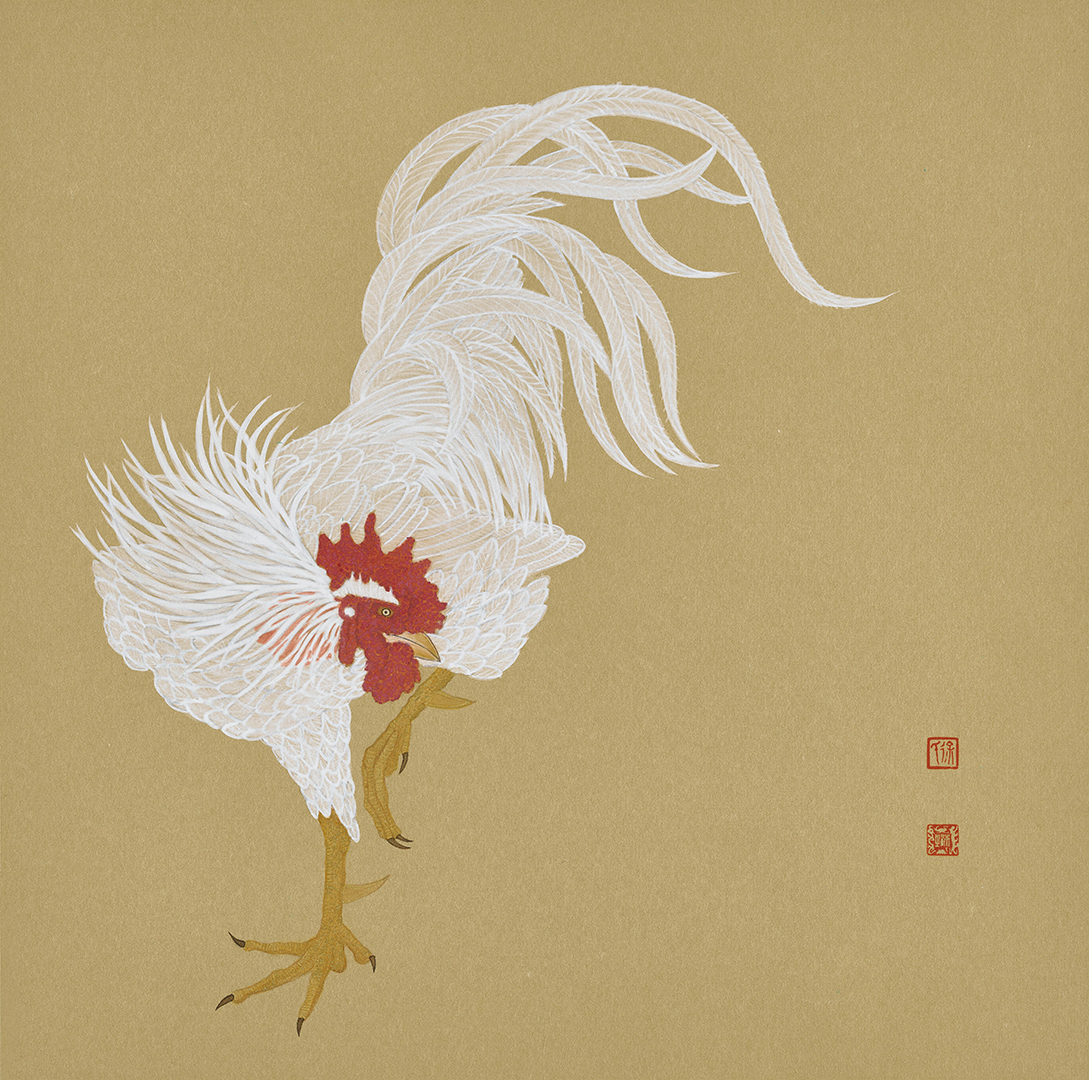
To make the painting have an interesting contrast, I used different types of gold paper. The rooster and fish are painted on dark golden paper which is suitable for vibrant hues. I once saw a freehand brushwork painting of a white rooster by Yang Shanshen (1913-2004). It captures the energetic spirit of the rooster with simple brushstrokes. The rooster by Emperor Xuanzong (1399-1435) of Ming dynasty is very delicate and I also made reference of it.
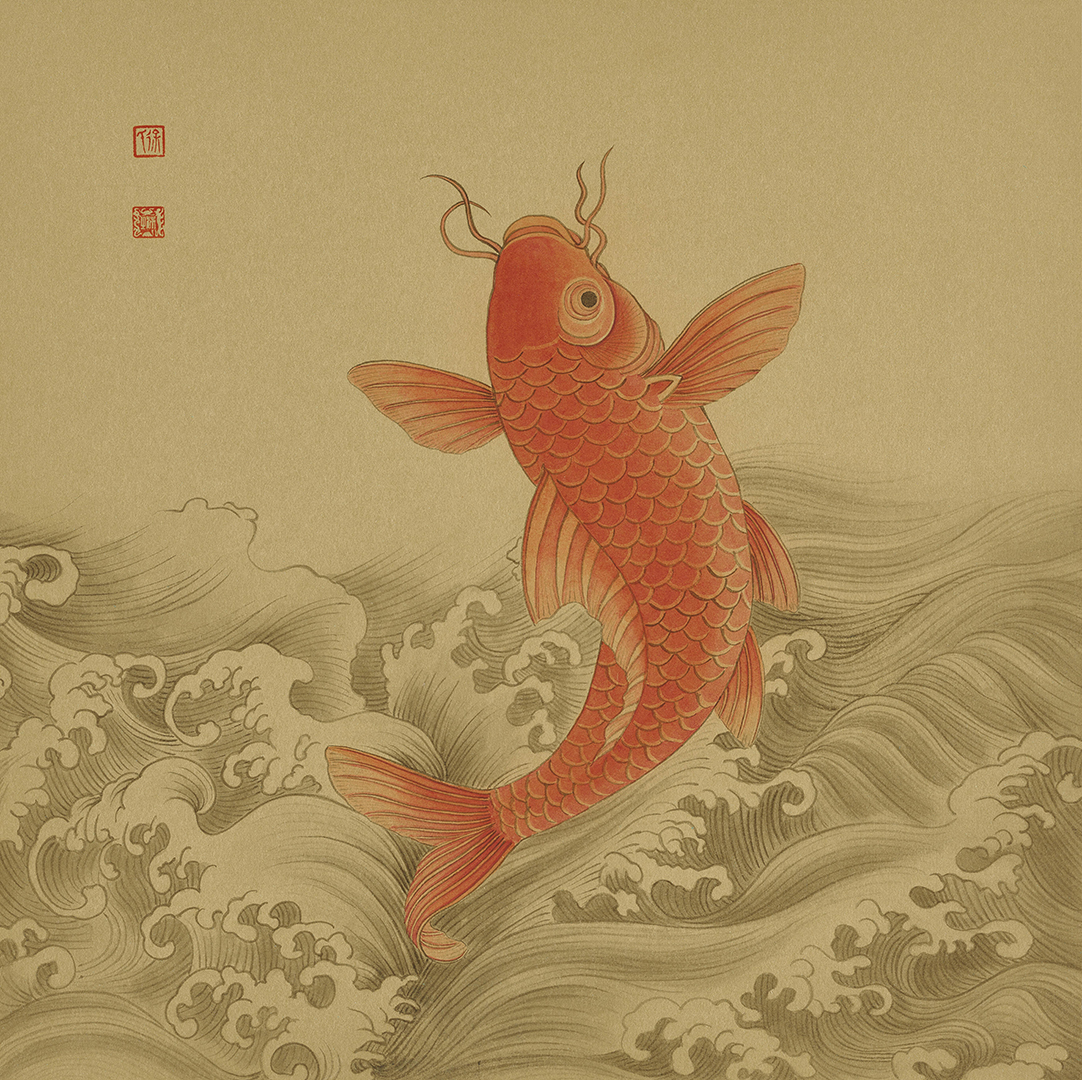
Fish is a familiar subject in Chinese ink painting and there are many references found in traditional paintings. Amongst them, Fish and Aquatic Grass by Miao Fu during Ming Dynasty (15th century) is simply breathtaking. The level of detail of the carp is exquisite with every fish scale and fin meticulously rendered. The fish looks adorable. I use this technique to depict a carp jumping over the dragon’s gate. I also need to find a suitable method to draw the water. In recent years, too many paintings of waves are done in the style of Katsushika Hokusai (1760-1849). Hence, I have studied paintings from the Song dynasty (960-1279) instead.
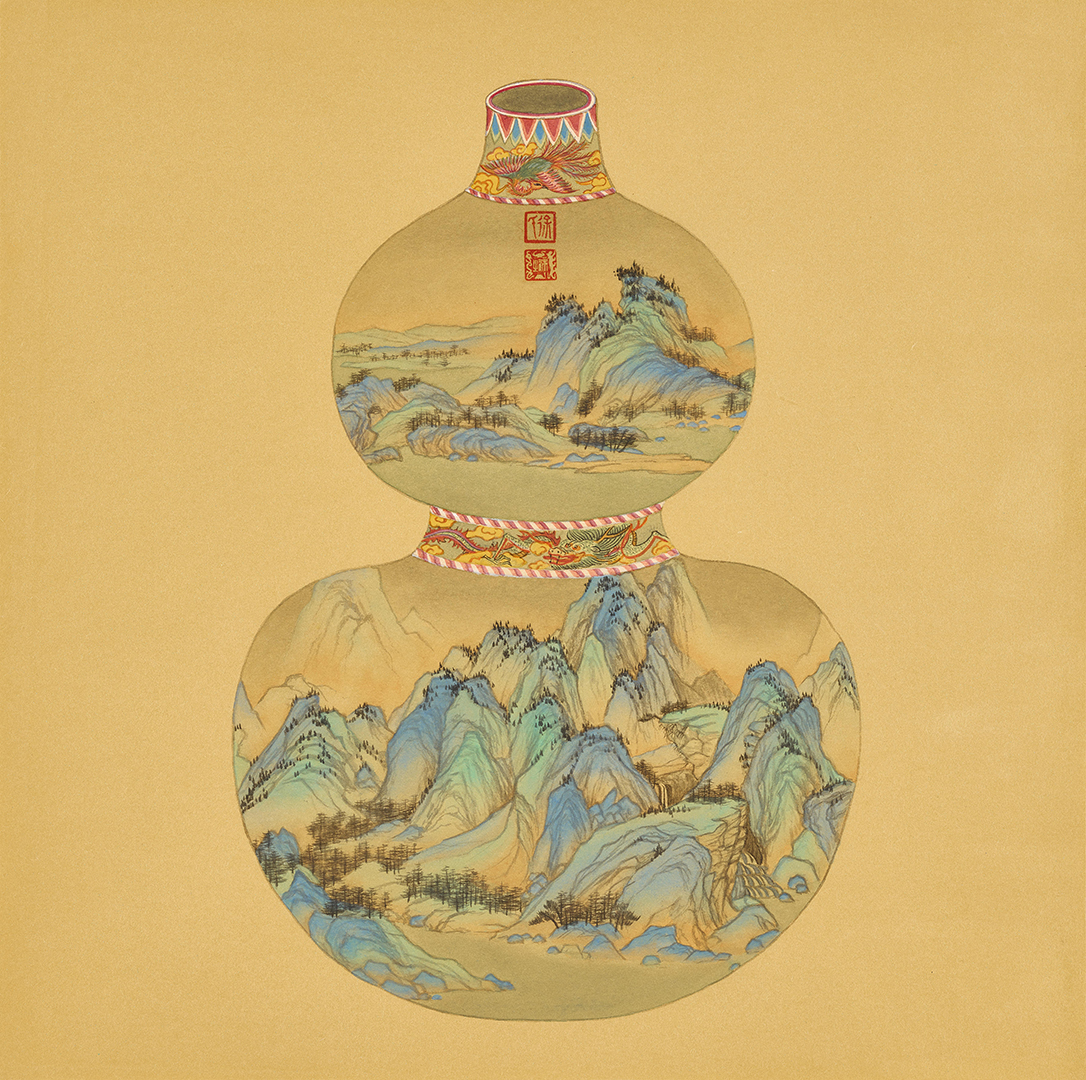
There are not many ancient paintings of gourds, but during the research process, I discovered the Gourd Vase by Chen Lin (1260-1320) of Yuan dynasty. It is delicately painted. Its body is full of flowers and birds in gongbi style. The most interesting part is that the flowers and birds are not drawn according to the curvature of the vase which is very unscientific. The scenery on the vase appears as if it belongs to another dimension. This made me think that the gourd is one of the magical tools of the immortals, and the Monkey King has been captured by it on several occasions. Hence, I have painted the A Thousand Li of Rivers and Mountains by Wang Ximeng (1096-1119) onto the gourd.
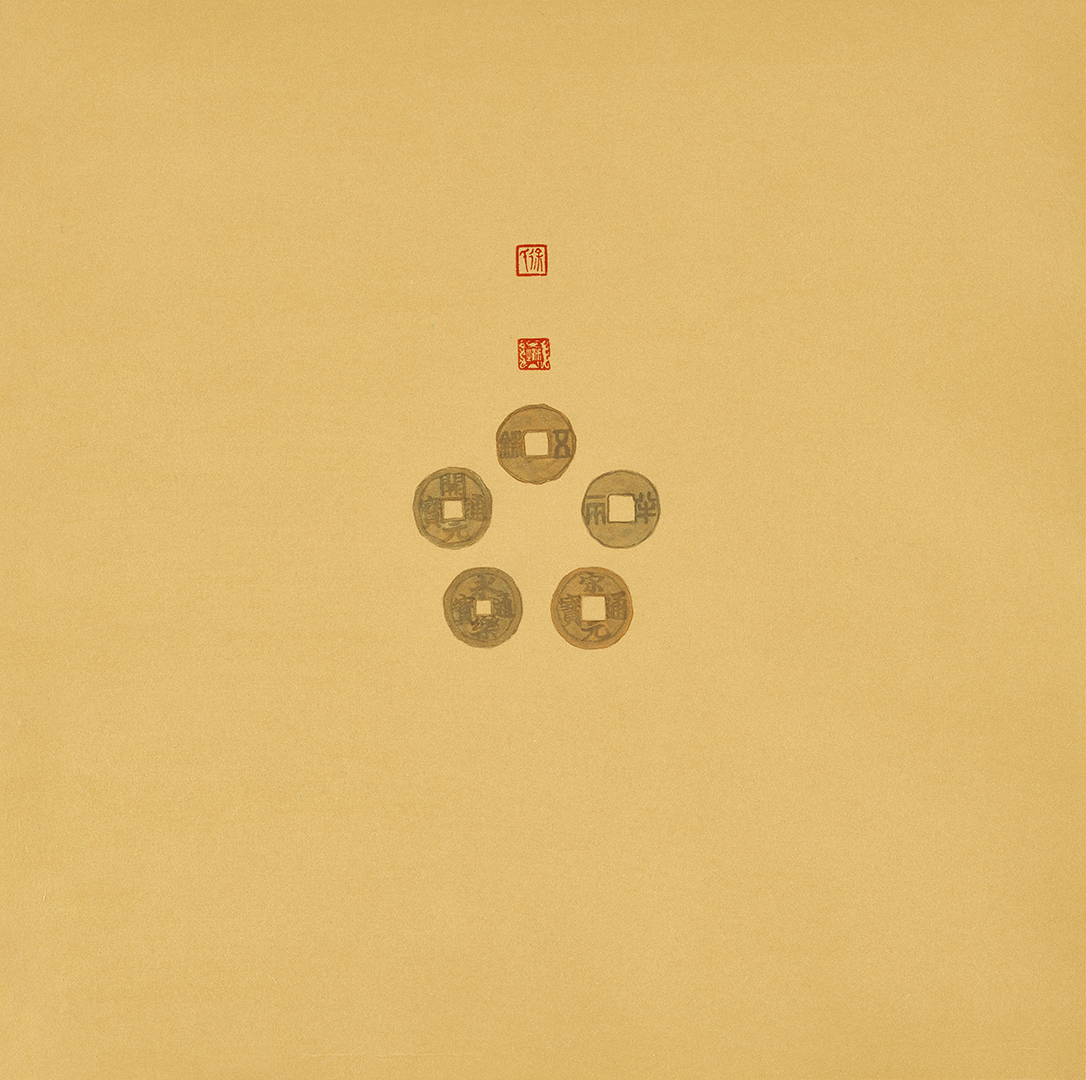
There is no suitable reference material for depicting Chinese copper coins. So I painted using actual Five-Emperor coins which are arranged according to Feng Shui to bring good fortune and prosperity.
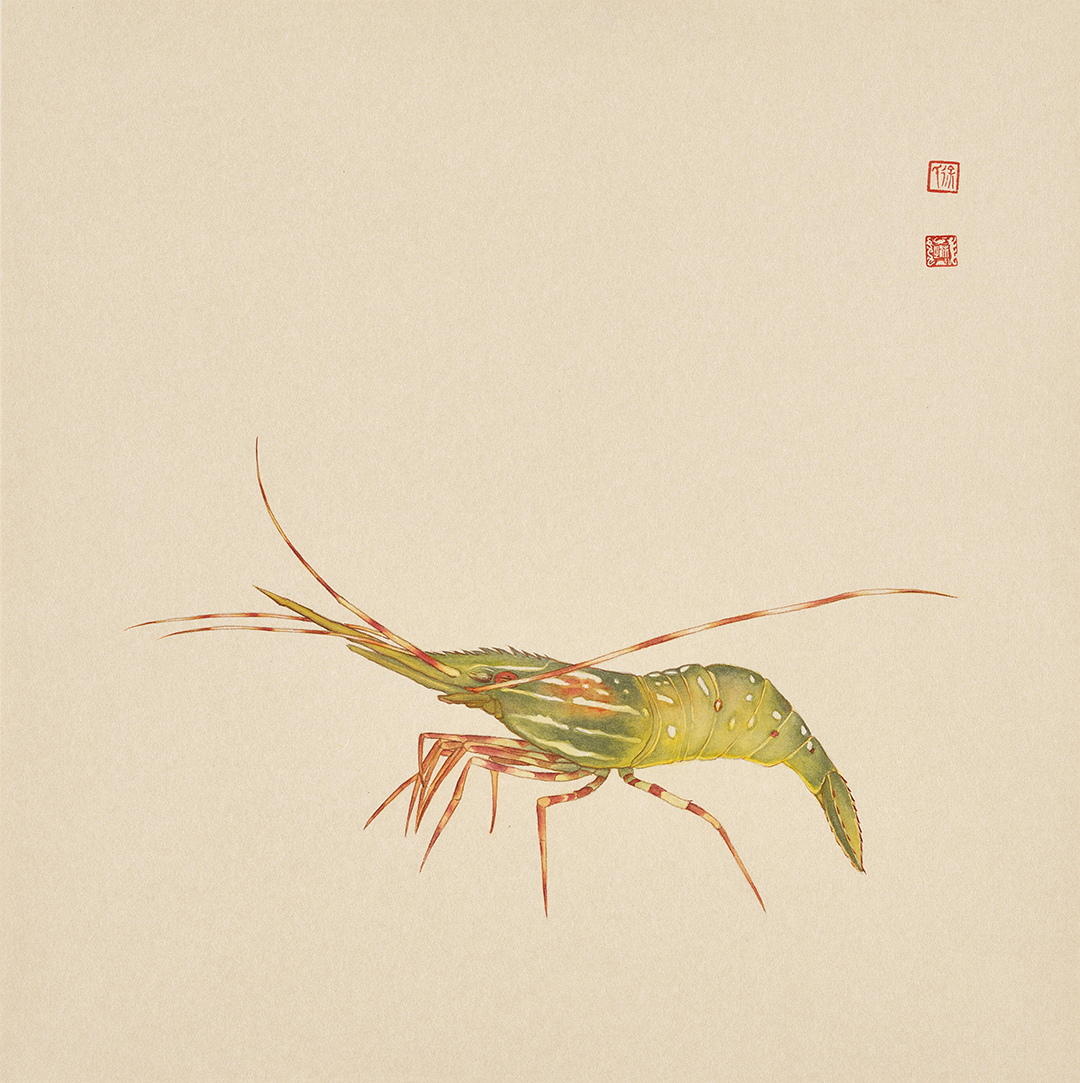
Prawns in traditional Chinese paintings look peculiar. I can find references in the Illustrated Album of Sea Ornaments (Qing Dynasty 1700s) and the works by Pu Xinyu (1896-1963) but their depictions are very simple. I decided to use the painting method of crab to paint prawn.
There is a Hong Kong slang for the old HK 10-dollar bank note which is no longer in circulation. We call it ‘green crab’ or 青蟹 in Chinese.